Bold Bet: Kenya's Offshore Wind Ambition Faces Infrastructure Reality
Kenya's ambitious move into offshore wind energy, underscored by its GOWA membership, promises a greener grid but faces substantial financial and infrastructural challenges, demanding significant capital and upgrades.
Kenya's Wind Gamble
Kenya's entry into the Global Offshore Wind Alliance (GOWA) marks a pivotal strategic turn toward large-scale renewable energy. This move offers Kenya a chance to diversify its energy mix and meet burgeoning demand. However, realizing this ambition requires navigating significant financial and infrastructural hurdles, including securing massive capital investment and upgrading existing grid and port capabilities.
Kenya's offshore wind aspirations hinge on a delicate balance: impressive renewable energy penetration juxtaposed with daunting financial and infrastructure demands. Can Kenya secure the necessary investment and modernize its infrastructure to harness this new clean energy source?
Kenya's Energy Mix
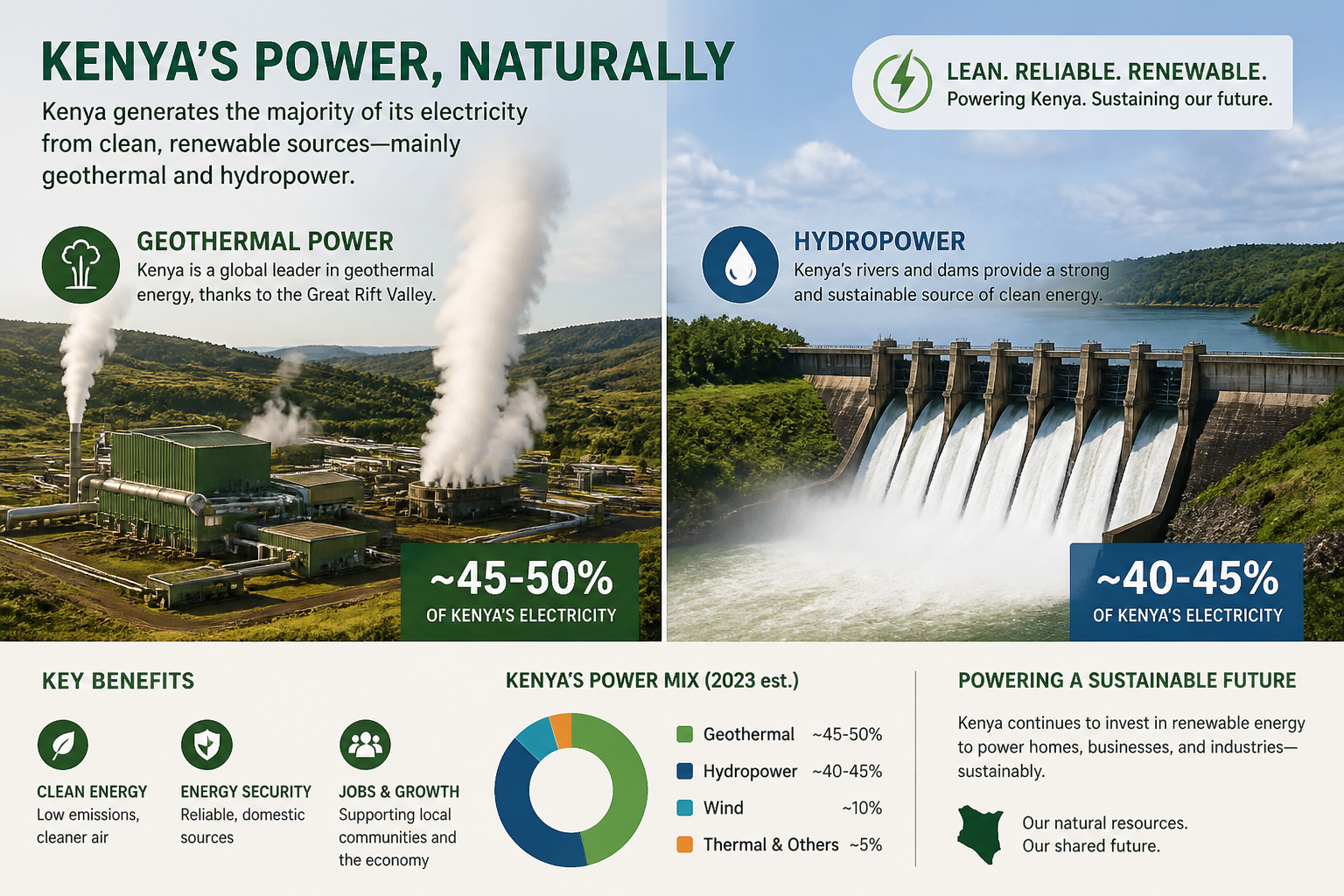
Kenya already relies heavily on renewable energy. In 2022, geothermal generation alone contributed approximately 47% of its electricity mix, pushing the broader renewable energy share to between 83% and 95%. While notable, this energy mix has weak points; hydropower, for example, remains vulnerable to drought. Kenya's electricity demand is projected to climb, fueled by an expanding economy. By joining the Global Offshore Wind Alliance, Kenya commits to exploring and developing its offshore wind potential, aligning with global efforts to accelerate clean energy transitions.
Joining GOWA enables Kenya to collaborate with other nations in building a robust offshore wind sector. This includes sharing best practices, technological advancements, and policy frameworks. The Global Offshore Wind Alliance, co-led by Denmark, the International Renewable Energy Agency (IRENA), and the Global Wind Energy Council (GWEC), aims to speed up offshore wind deployment globally to combat climate change and ensure energy security. Kenya's participation could unlock new investment streams and critical technical expertise for establishing a completely new energy sector within the country.
Billions in Investment
Initial offshore wind projects in Kenya will require substantial capital investment, potentially running into billions of dollars. Offshore wind farms are among the most capital-intensive energy projects; they demand significant upfront expenditure for turbines, foundations, subsea cables, and specialized installation vessels. For perspective, a typical 1 GW offshore wind farm can cost anywhere from $3 billion to $5 billion, depending on its location and the technology used. Kenya's ability to attract and secure this level of financing will be critical.
Financing mechanisms could blend public-private partnerships, where state entities collaborate with private developers, and loans from multilateral development banks. Institutions like the African Development Bank (AfDB) and the World Bank Group have a mandate to finance sustainable development projects and assist client countries with challenges like climate change, poverty reduction, and infrastructure development. These institutions often provide concessional financing and technical assistance for large infrastructure projects in developing countries. Yet, even with such support, the sheer scale of investment required poses a formidable challenge for a nation like Kenya.
Infrastructure Needs
Beyond financing, Kenya’s existing grid infrastructure and port capabilities may need substantial upgrades to support offshore wind development. Offshore wind farms demand strong transmission networks to move electricity from coastal landing points to demand centers; this often means building new high-voltage lines and substations. While Kenya's grid supports a high proportion of renewables, it may require specific enhancements to handle the intermittent, large-scale power injection characteristic of offshore wind.
Port infrastructure is equally vital. The massive components of offshore wind turbines—blades, nacelles, and foundations—require specialized heavy-lift vessels and deep-water ports with extensive laydown areas for assembly and marshaling. Developing the necessary port infrastructure in East Africa to handle such operations would be a prerequisite for any significant project deployment. Investments in port upgrades, including dredging, quay reinforcement, and specialized equipment, would likely become necessary.
Lessons from Others
Other developing nations offer valuable lessons. Vietnam, for instance, has aggressively pursued offshore wind, bolstered by significant government support and international financing. Projects elsewhere demonstrate rapid deployment potential when policy frameworks are clear and investment is streamlined. Conversely, some early ventures in other developing countries have stalled due to regulatory uncertainties, insufficient grid capacity, or difficulties securing long-term power purchase agreements.
India, another developing nation with vast coastlines, has also explored offshore wind, though progress has faced hurdles. These include establishing viable tariffs for developers, ensuring land availability for onshore infrastructure, and navigating complex environmental regulations. Such experiences underscore Kenya's need to establish a clear, stable regulatory environment, develop a transparent procurement process, and proactively address infrastructural bottlenecks to ensure project viability. This requires meticulous planning, substantial capital mobilization, and coordinated efforts across government agencies, international partners, and private investors.
Outlook
The commitment to offshore wind could fundamentally transform Kenya’s energy landscape, offering a stable and large-scale source of clean electricity. It also aligns with Kenya's ambitious climate goals and its role as a renewable energy leader in Africa. However, the path forward is complex. Failure to secure adequate financing or address infrastructural deficiencies could delay projects or render them economically unviable. While the long-term benefits of energy independence and reduced carbon emissions remain significant, the initial hurdles highlight that Kenya's offshore wind aspirations are a long-term play, demanding sustained commitment and strategic investment.