Kenya Wins: How President William Ruto's Frequent Foreign Trips Pays Off
President Ruto's foreign trips are more than ceremonial; they're a calculated strategy for Kenya's economic growth. Despite criticism, these engagements are securing vital investments and elevating Kenya's global standing, bringing tangible benefits like significant clean energy funding and strategic partnerships.
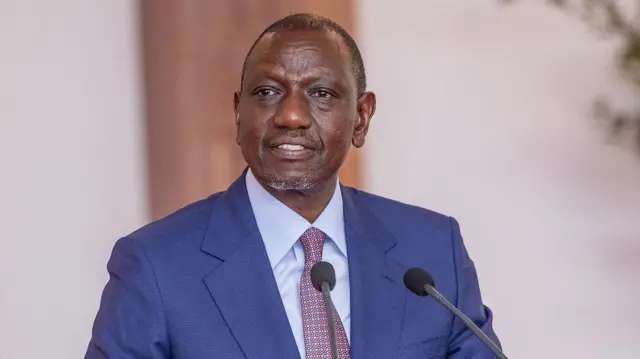
Ruto's Travels: Securing Kenya's Future
President William Ruto’s extensive foreign travel is a calculated, crucial strategy for Kenya's economic advancement and its standing on the global stage. While some critics lament the perceived cost, these trips actively yield tangible benefits, positioning Kenya as a key player in critical sectors. These high-level engagements are not merely ceremonial; they are essential for attracting investment, fostering partnerships, and securing Kenya's economic future.
The President himself consistently articulates that his engagements abroad directly advance Kenya's development agenda. He emphasizes he travels not for leisure, but to pursue opportunities translating into jobs, investments, and partnerships for the country. This proactive approach to international relations is essential for Kenya, which seeks to accelerate economic growth and improve citizens' livelihoods.
Diplomacy's Tangible Outcomes
Tangible outcomes are already emerging from these diplomatic efforts. Consider the recent visit to the United States: during the May 2024 state visit, President Ruto met with President Biden, and their discussions secured significant deals. For instance, the US Development Finance Corporation approved $250 million in new investments for clean energy and climate adaptation projects in Kenya, as reported by The Standard. These funds are not mere injections; these investments support Kenya's ambitious transition to green energy, a sector with immense potential for job creation and sustainable development.
The visit also forged a new strategic partnership, elevating Kenya to a major non-NATO ally of the U.S. This designation, the first in Sub-Saharan Africa, signifies enhanced security cooperation and could unlock further economic and military assistance. Such a strategic alliance also bolsters investor confidence, signaling a stable and reliable environment for foreign direct investment.
Securing Our Future
Beyond the US, President Ruto's travels target diverse sectors. His participation in forums like the AI Safety Summit in the UK and his visits to technology hubs illustrate a concerted effort to position Kenya as a leader in the digital economy. These engagements prove vital for attracting foreign technology companies, fostering innovation, and securing partnerships capable of transferring critical skills and knowledge to the Kenyan workforce. Imagine the impact of these collaborations on our burgeoning tech startup ecosystem.
The economic benefits, while sometimes long-term, are undeniable. During his US visit, for example, several deals aimed at boosting Kenya's manufacturing and agricultural sectors progressed. Specific agreements included a partnership between Acorn Holdings and the US DFC for student housing development and a $100 million investment by Copia Global to expand e-commerce access in rural areas, according to reporting by The Standard. These are direct investments, creating jobs, enhancing infrastructure, and empowering local businesses, all contributing to the national Gross Domestic Product (GDP).
Addressing Criticisms
Every strategy faces detractors. The most common criticism revolves around the perceived high cost and frequency of these foreign trips, particularly when many Kenyans face economic hardship. Opponents argue funds could find better use domestically. However, this view often misses the bigger picture: the cost of inaction. In a fiercely competitive global landscape, waiting for opportunities to come to Kenya is a luxury we cannot afford. Proactive engagement ensures Kenya sits at the table when critical decisions are made and investments allocated.
While immediate expenditure on travel might seem significant, potential returns from foreign investment, trade deals, and strategic partnerships far outweigh these costs. Many developing nations, recognizing this imperative, adopt similar aggressive diplomatic strategies. Rwanda, for instance, successfully uses international engagements to attract significant foreign investment and position itself as a tech hub in Africa, as Al Jazeera frequently reports. Kenya's approach is not an anomaly but standard practice among nations striving for rapid development.
It is easy to criticize from the sidelines, but true leadership demands both foresight and the courage to make strategic decisions. President Ruto's foreign trips are not vanity projects; they are indispensable tools for unlocking Kenya's economic potential, fostering international goodwill, and ensuring Kenya secures its rightful place in the global economy. We must look beyond immediate optics and recognize the long-term gains these engagements are designed to deliver for every Kenyan.