Bigger Isn't Better: FIFA's Expanded World Cup Sacrifices Quality
The upcoming 2026 FIFA World Cup, with its expanded 48-team format and three host nations, is a misguided venture. This opinion piece argues the expansion will dilute competitive quality, create logistical chaos, and erode the unique fan experience, prioritizing financial gain over the spirit of football's premier event.
Opinion: FIFA's 2026 World Cup is Too Big for Its Own Good
The magic of the FIFA World Cup has long resided in its exclusivity, the intense competition among the world's best 32 nations, and the unifying spectacle held largely within a single, vibrant host country. That era is ending. The expansion to 48 teams and three host nations for the 2026 World Cup risks diluting the quality of play, creating logistical nightmares, and eroding the unique cultural immersion that defines the tournament. I believe this expansion prioritizes financial gain over the sporting integrity and fan experience of football's premier event.
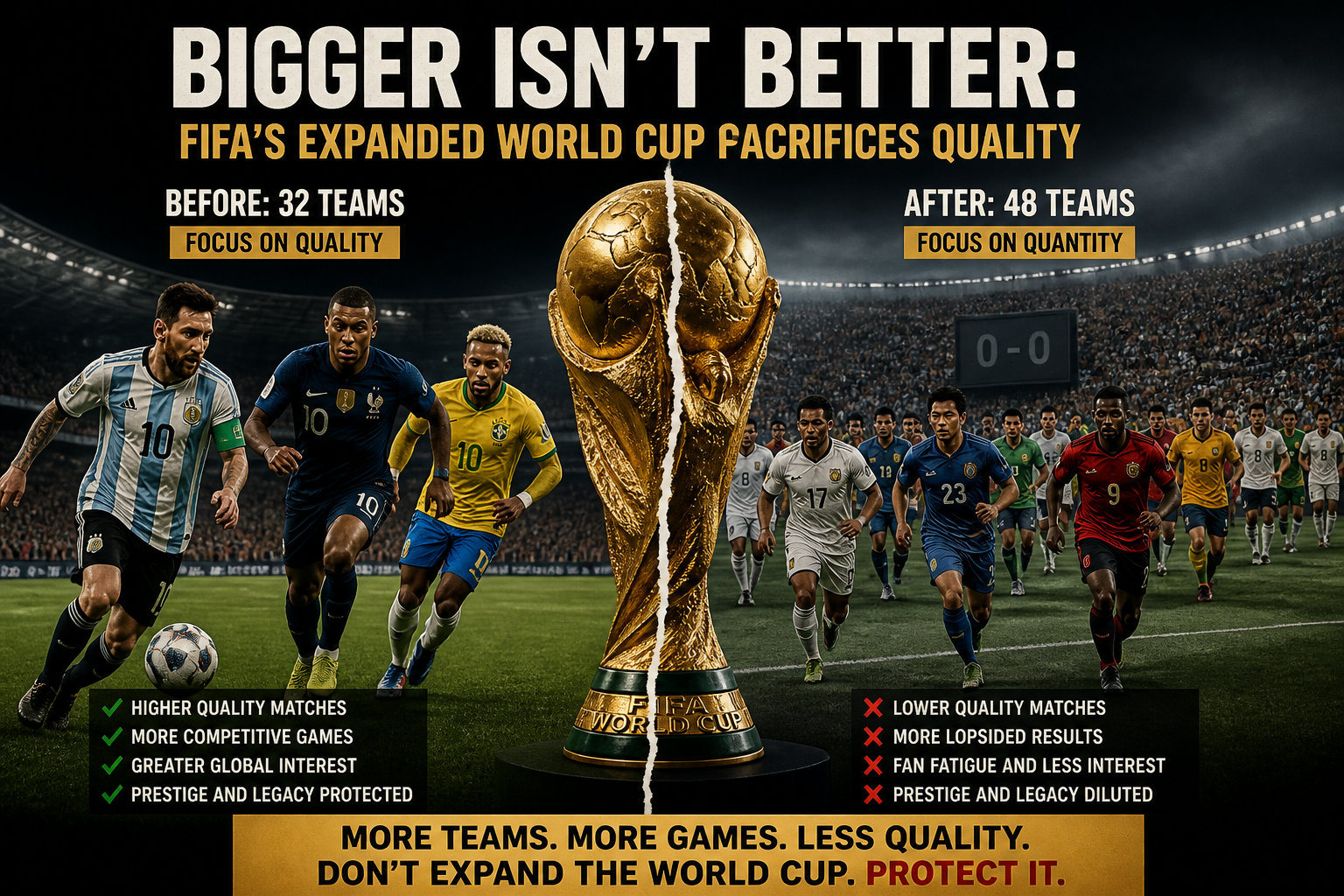
The decision to swell the tournament from 32 to 48 teams, adding 40 matches for a total of 104 games, fundamentally alters the competitive balance that has been the bedrock of every successful World Cup since 1998. For over two decades, the 32-team format delivered compelling group stages and high-stakes knockout rounds, showcasing the sport's pinnacle talents with remarkable consistency. History shows us this format worked, providing tight contests and memorable upsets without sacrificing overall quality. The argument that "more is better" in this case is a fallacy; increasing the quantity of teams does not automatically translate to an uplift in quality. Instead, we are likely to witness a greater number of one-sided affairs in the group stage as stronger teams routinely dispatch less experienced contenders, diminishing the excitement and unpredictability that fans crave. This new 12-group format, where even third-placed teams in some groups might advance, further lessens the stakes in early-round matches.
Beyond the pitch, the logistical challenge of hosting 48 teams across three vast nations—the USA, Canada, and Mexico—is daunting, if not insurmountable for attendees. The 2026 World Cup will utilize 16 host cities spread across thousands of miles, necessitating extensive travel for teams, staff, and crucially, for fans. The unique cultural immersion, where supporters from around the globe converge on a central location and weave themselves into the fabric of a host nation, will be fractured. Imagine trying to follow your team from Vancouver to Mexico City to Miami within a few weeks; the cost and complexity would be prohibitive for all but the wealthiest, alienating the everyday fan who saves for years for such an experience. This distributed model inherently dilutes the singular, festive atmosphere that has defined past tournaments, replacing it with a fragmented experience across separate national contexts.
Some argue that the expansion is a crucial step for global inclusivity, giving more nations the chance to participate on football's biggest stage and grow the sport worldwide. FIFA often champions this rationale, alongside the undeniable financial windfalls from increased matches and commercial opportunities. I understand the desire to broaden participation. However, this inclusivity should not come at the cost of the tournament's sporting pedigree. There are more effective, less disruptive ways to foster global football development. Investing directly in grassroots programs, coaching education, and infrastructure in emerging football nations throughout the four-year cycle, rather than simply handing out more World Cup berths, would yield far more sustainable and meaningful growth. These efforts would build genuine competitive strength, allowing nations to qualify for the World Cup on merit within a rigorous existing framework, rather than being ushered in under a diluted system.
The World Cup has always been about sporting excellence, a true test of nations. By inflating the number of participants and logistical demands, FIFA risks turning what was once a jewel into something unwieldy and ultimately, less special. We need to preserve the tournament's competitive core and communal spirit. I urge FIFA to reconsider such drastic expansions for future tournaments and instead focus on initiatives that truly uplift global football without compromising the integrity of its most cherished event.